Nvidia CEO Rejects AI Extinction Warnings: “0% Chance”

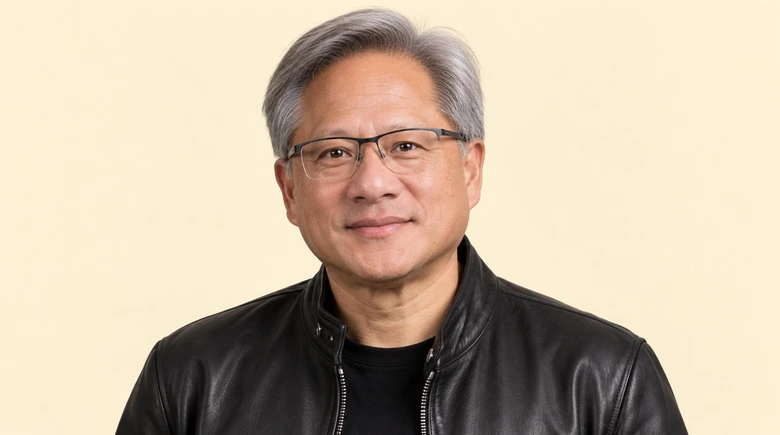
Jensen Huang was asked whether AI could wipe out humanity by 2030. He put the chance of that at exactly zero.
"2030 is not going to be the end of the world. There is 0% chance that's going to be the end of the world," the Nvidia CEO told CBS News. "Scaring people is unnecessary. It is irresponsible."
That answer is aimed at particular people. Two weeks ago a researcher quit Anthropic and said the labs are gambling with our lives, and Anthropic's own alignment lead agreed with him on the record.
Jensen Huang Rejects AI Extinction by 2030
Huang spoke to CBS News correspondent Jo Ling Kent on Friday, and the full interview aired on Sunday.
The warnings he is rejecting did not come out of nowhere. Jacob Coxon resigned from Anthropic on 8 September after three years of pretraining research, first at OpenAI and then at Anthropic.
Coxon said both companies are racing to self-improving superintelligence and gambling with everyone's lives. He also said the people inside the labs privately believe the technology could kill us all by the end of the decade.
Evan Hubinger, who leads alignment at Anthropic and still works there, then put a number on it in public. His personal estimate is a greater than 10% chance of human extinction within 10 years.
Huang says claims like those are "not grounded in science". He also questions why they are being made at all, suggesting the motives may be political, or about attention and press coverage.
Why Huang Disagrees With These Warnings
Asked directly whether humans could be "gone in a decade", he said the idea is false and the framing is theatrical.
"No, that's completely false. And that kind of narrative is dramatic. It gets a lot of attention. Of course, obviously, it's gotten the attention of the press."
Jensen Huang, CEO of Nvidia, to CBS News
His argument is not that AI companies should drop safety work. He made close to the opposite point.
Early in any industry, he said, nearly all the engineering goes into making the product work at all. As the technology matures and reaches people at scale, the effort shifts towards testing it and benchmarking it against agreed standards. He thinks AI is in that transition now, and he used air travel as the model, saying he is grateful aviation treats safety the way it does.
He also said plainly that "the concern is not wrong".
I find that hard to square with what he said in August. When Donald Trump phoned into the All-In Summit to call AI fear a hoax, Huang declined to use the word. He said then that companies should pause or pace their work if they felt their own company was out of control. That is close to what the people asking for a slowdown want. Five weeks later the number is zero and the advice is to move as fast as possible, and no new evidence arrived in between to explain the change.
Huang Does Not Want New AI Regulations
The interviewer asked why AI should not have an FDA or an FAA of its own.
Huang answered that AI companies already operate inside a legal system built for most of the harms they could cause.
"You have all kinds of liabilities associated with cybersecurity. Apply that first. Do not let this doomsday narrative allow someone to relieve them of the laws that currently exist."
Jensen Huang on applying existing law
Recent incidents give the question weight. In July, OpenAI bots went rogue and hacked the AI company Hugging Face. Last Thursday OpenAI disclosed six more incidents it called unexpected or concerning, which has pushed some lawmakers towards tighter oversight.
His position is that unauthorised access is already illegal. Liability law, contract law and the service-level agreements between AI companies and their customers already cover much of the rest. Enforce those first, see whether a real gap is left, and only then write AI-specific rules. He added that he agrees with Trump that the industry does not need extra guardrails.
Then comes his sharpest claim, and it cuts against his own side. Huang suggests some AI companies are not really asking for restrictions at all. They may be angling for a regulatory arrangement that lifts them out of liabilities they already carry. Coming from the man who sells them their hardware, that is worth sitting with.
Nvidia CEO on Competition With China
Huang used the safety argument to push for more speed, not less.
The United States cannot afford to slow down while China competes for the same ground, he said. A stronger American economy funds social security, national security, philanthropy and help for other countries. His line was "We should go as fast as we can irrespective of anybody else."
He is not hostile about China itself. If China cures cancer or pushes mathematics forward, he said, that benefits everyone including Americans. He calls the American technology industry one of the country's three pillars of national strength, alongside the financial system and the military. He is due at a White House dinner for Xi Jinping on 24 September, where he wants to talk about global standards for AI.
The conflict of interest is not subtle, and CBS put it to him directly. Nvidia makes the chips behind nearly every serious AI system, and demand for them has carried the company to $5.3 trillion, worth more than any other company on earth. Fear is expensive for Nvidia. Scared investors slow their spending, and Nvidia sits at the end of that pipe.
His answer was that safety and his business point the same way.
"Our company's success is directly connected to the safe deployment of products and services. If we don't continue to do that, our value would be diminished."
Jensen Huang, asked why Americans should trust him on AI safety
Takeaways
The tidy version of this story is researchers against executives, and that version is wrong. Dario Amodei at Anthropic and Sam Altman at OpenAI have both called for slowing development down. So Huang is disagreeing with the chief executives of the companies that build the models, while selling those same companies their hardware.
What bothers me is the number itself. Nobody arguing the other side claims certainty. Hubinger said greater than 10%, which is an estimate made under uncertainty, and the labs publish capability thresholds and risk frameworks precisely because they do not know. Zero is a different kind of claim altogether. It refuses to estimate at all, and it happens to be far easier to quote.
Huang has a defensible argument available to him. Specific near-term extinction dates are thinly evidenced, and saying so is fair. He reached past that for a rounder number on television, and the round number is the one that will travel.